
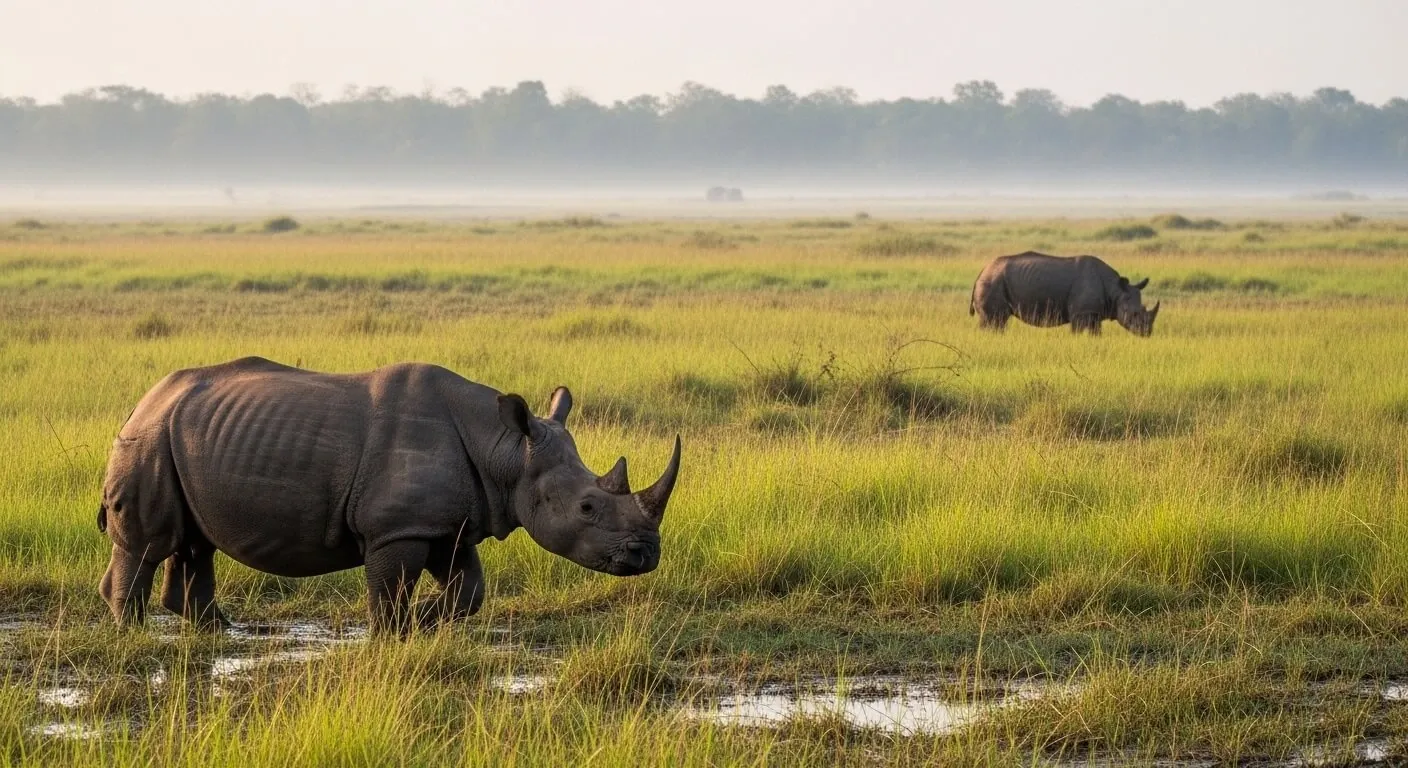
Kaziranga National Park is one of India's most celebrated wildlife destinations and the pride of Assam's natural heritage. Spread across the floodplains of the Brahmaputra in the Golaghat and Nagaon districts, the park is globally known for sheltering the world's largest population of the one-horned rhinoceros. Beyond the rhinos, Kaziranga is a rich mosaic of tall grasslands, marshes, beels, and forest patches where elephants, swamp deer, wild buffalo, and tigers thrive. For travelers, Kaziranga is not just a safari destination; it is a living landscape shaped by rivers, seasonal floods, and long conservation effort.
Kaziranga National Park
A legendary Assam landscape of rhinos, elephant grass, wetlands, and river-shaped wilderness
A Glimpse into the History of Kaziranga
Early Protection for the Rhinos
Kaziranga's conservation story began in the early twentieth century after concerns were raised that the one-horned rhinoceros was disappearing from this part of Assam. The area first received protected status in 1905, and over time its boundaries and legal protection were strengthened to secure wildlife habitat across the Brahmaputra floodplain.
From Reserve to National Park
The protected landscape gradually evolved through different legal stages before being declared a national park in 1974. This change gave stronger long-term protection to its grasslands, wetlands, and forest tracts, helping Kaziranga grow into one of India's most respected wildlife reserves.
UNESCO and Global Recognition
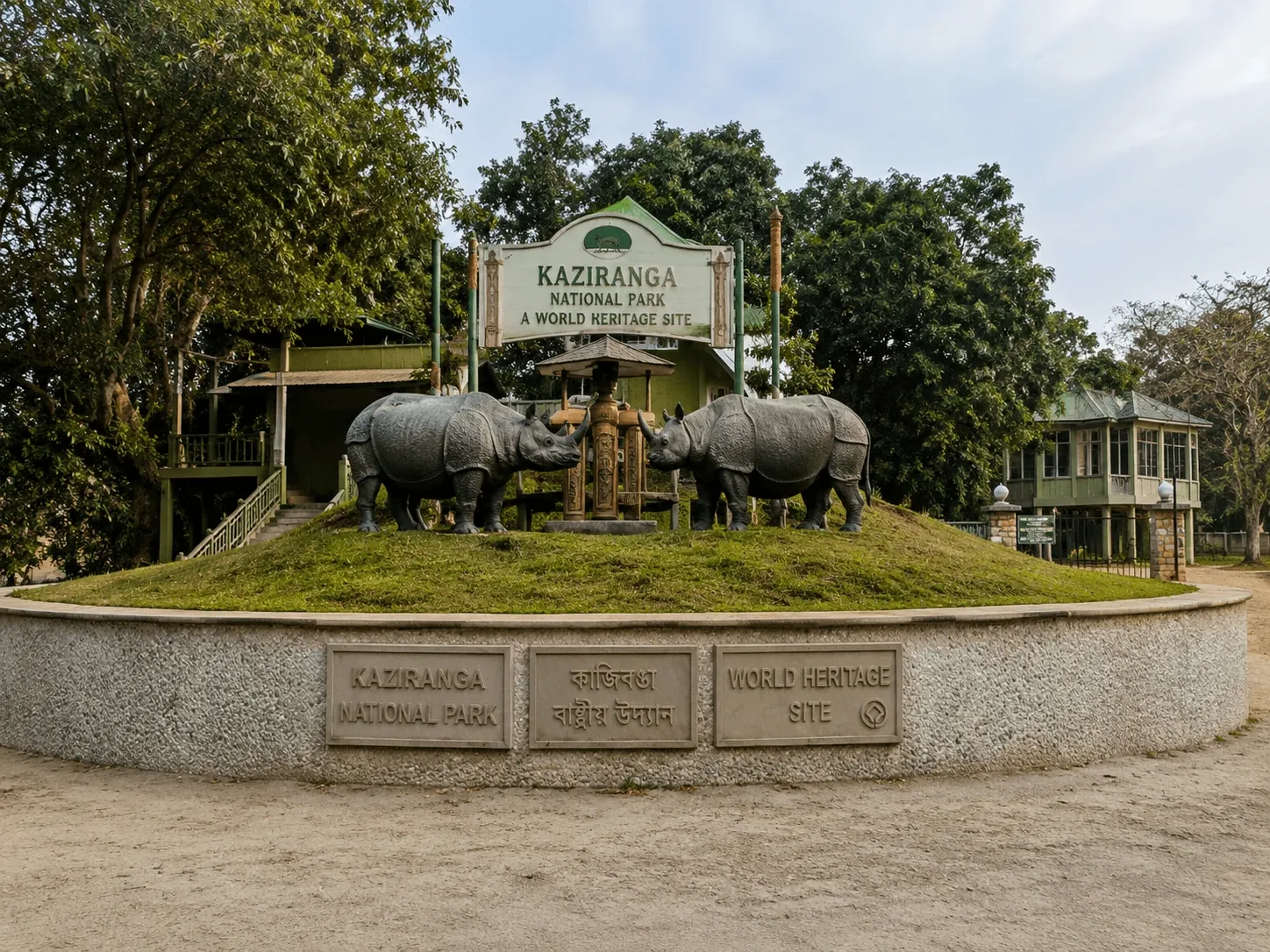
Kaziranga was inscribed as a UNESCO World Heritage Site in 1985 because of its outstanding natural value and its crucial role in conserving large mammals of the Assam floodplain. Today it also forms an important tiger landscape and remains one of the strongest examples of successful wildlife protection in South Asia.
Significance of Kaziranga National Park
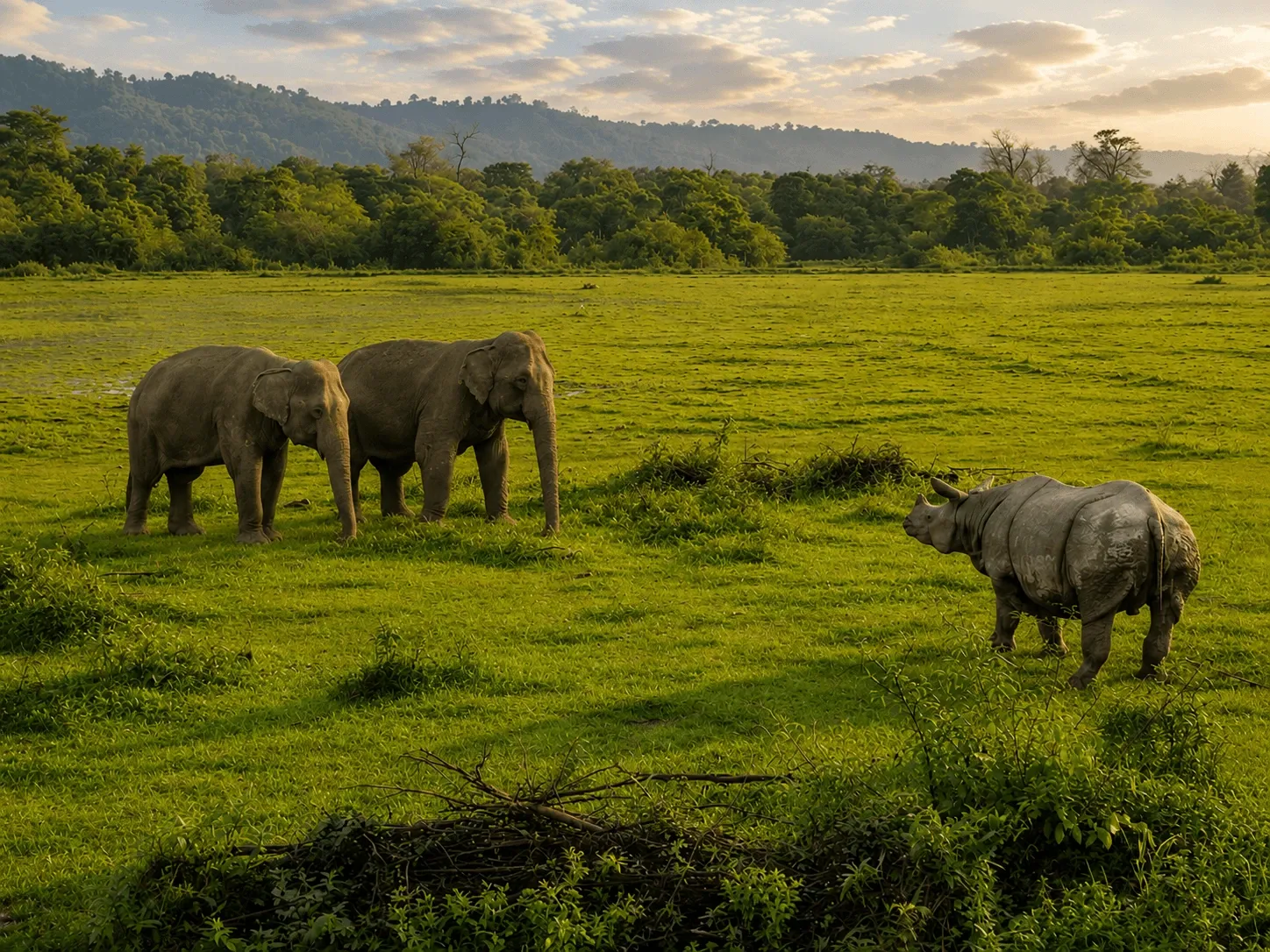
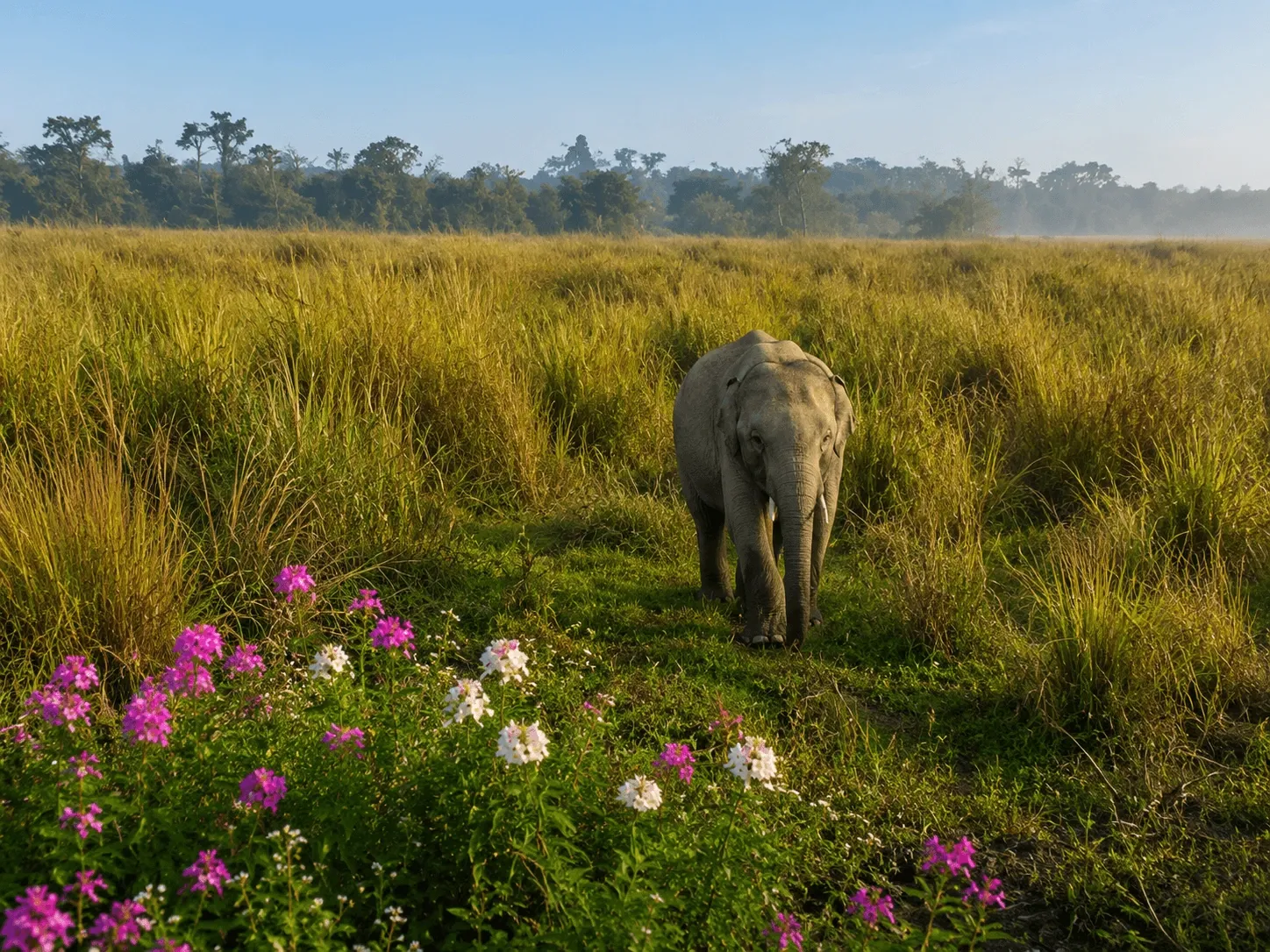
Kaziranga is most famous for its one-horned rhinoceroses, but its importance goes much deeper. The park protects a complete floodplain ecosystem where grasslands, water bodies, and woodland support an extraordinary concentration of wildlife. It is also one of the few places in India where travelers may see rhino, elephant, wild buffalo, deer, and rich birdlife in a single visit. For Assam, Kaziranga stands as both an ecological treasure and a symbol of conservation success.
Festivals and Seasonal Experiences Around Kaziranga
Kaziranga Elephant Festival
Held around the Kaziranga landscape, this festival celebrates the bond between local communities, elephants, and conservation. It adds a cultural layer to the wildlife experience and is often timed in the main tourism season when visitor interest is high.
Bohag Bihu in Nearby Assam Towns
If you visit during April, nearby towns and villages around Bokakhat and Golaghat come alive with Bohag Bihu celebrations. Traditional songs, dances, and Assamese hospitality make the Kaziranga trip feel more rooted in the region's living culture.
Special Highlight: Safari Through the Rhino Grasslands
The most memorable part of Kaziranga is the safari experience through its vast elephant grass and wetland belts. Early morning jeep or elephant safaris often bring travelers close to rhinos, wild buffalo, deer, and many birds in beautiful golden light. Unlike a zoo-like wildlife experience, Kaziranga feels wild, open, and shaped by the river, which is exactly what makes it unforgettable.
Travel Guide to Kaziranga National Park
How to Reach Kaziranga
By Air: Jorhat Airport is one of the nearest practical airports, about 95 to 100 km away. Guwahati Airport is the more widely used major airport and is around 215 to 220 km from Kaziranga.
By Train: Furkating Junction is the nearest major railway station, roughly 70 to 75 km away. Some travelers also use Guwahati or Jorhat depending on their route.
By Road: Kaziranga is well connected by road through NH-37/NH-715 corridor. It is commonly reached from Guwahati, Jorhat, Tezpur, and Dimapur by private car, taxi, or bus.
Best Time to Visit
The best time to visit Kaziranga is from November to April, when the park remains open and wildlife sightings are usually better. The park typically closes during the monsoon season because floodwaters affect road access and animal movement.
Local Attractions
Kaziranga Orchid and Biodiversity Park: A very easy stop near the main tourism zone for orchids, local culture, and evening performances.
Kakochang Waterfall: A scenic outing near Bokakhat, often visited as a half-day nature detour.
Deoparbat Ruins: A historic site near Numaligarh, suitable for travelers who want a heritage stop near Kaziranga.
Tips for Devotees and Travelers
Book safari slots in advance during peak season, especially if you want an early-morning jeep or elephant ride.
Visit early in the morning for softer light, cooler weather, and better chances of seeing active wildlife.
Carry water, insect repellent, and sun protection because open safari tracks can get hot by late morning.
Follow speed rules near the park highway stretch and listen to forest staff instructions, especially during wildlife crossing periods.
Park Location
Image Gallery
Nearest Places to Visit
Kaziranga Orchid and Biodiversity Park
Kakochang Waterfall
Deoparbat Ruins
Bokakhat